
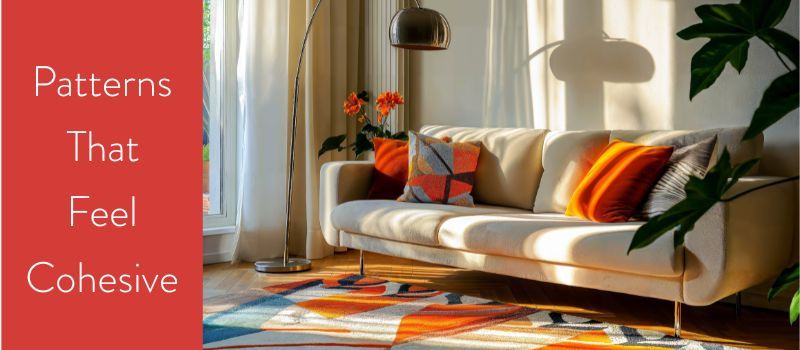
Mixing patterns often sounds more complicated than it needs to be. Many people worry that combining stripes, florals, or geometrics will make a room feel busy or mismatched. Pattern mixing is less about rules and more about balance. When done thoughtfully, it adds depth and personality without overwhelming the space.
The goal is not to make every pattern stand out. It is to let them work together so the room feels layered, comfortable, and intentional rather than overly styled.
Start with One Clear Anchor
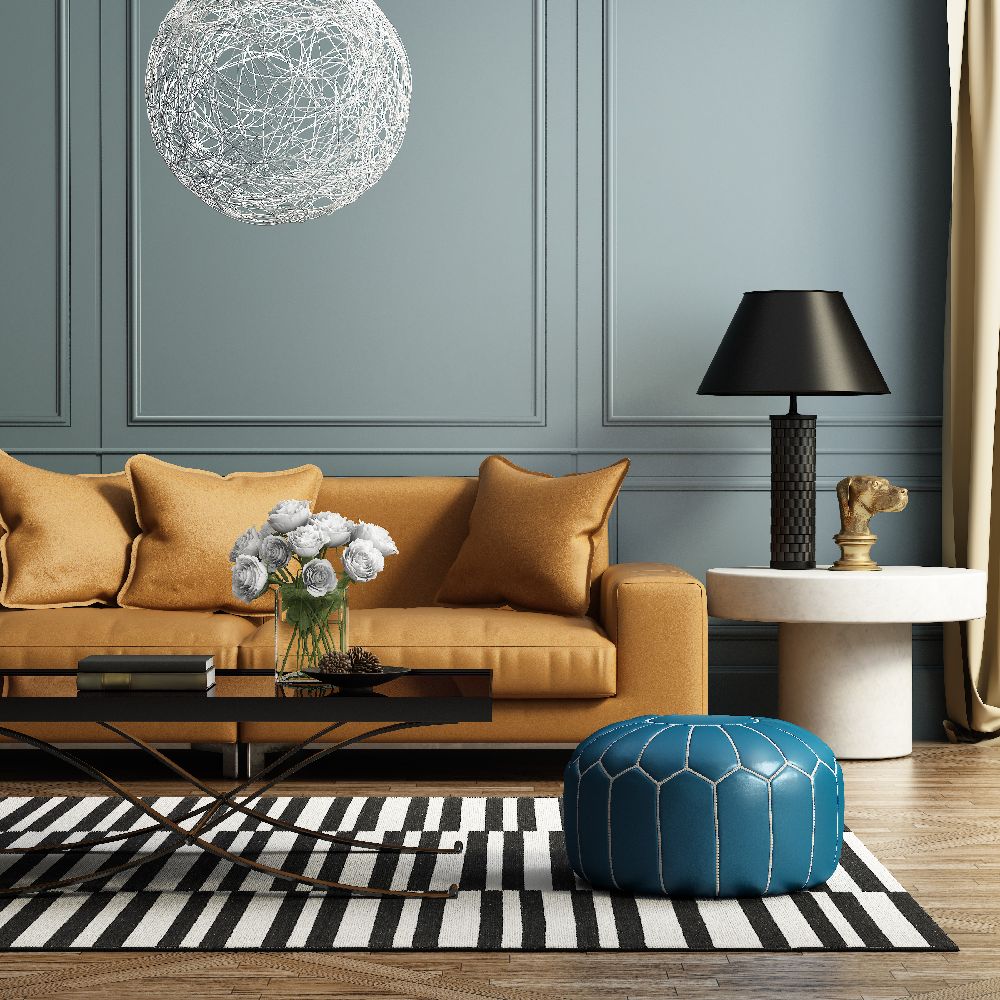
Every well-layered room begins with one pattern that leads the conversation. This anchor gives the eye a place to land and sets the tone for everything else. In many living rooms, that anchor is a patterned rug. In others, it might be an upholstered accent chair or a bold pillow on a neutral sofa.
Once that main pattern is established, the rest of the room can support it. Choosing one as a clear starting point keeps the space from feeling scattered and helps every additional layer feel purposeful.
Let Scale Do the Work
One of the easiest ways to mix patterns successfully is by changing their size rather than their color. Large patterns create structure and movement. Medium patterns add rhythm. Smaller patterns bring in texture and subtle detail.
When patterns share a similar color family but vary in scale, they naturally feel connected. This allows different designs to coexist without competing for attention.
Give the Eye Room to Rest
Patterns need contrast to feel balanced. Solid surfaces and simple finishes act as visual pauses that keep the room from feeling crowded. A solid sofa, natural wood table, or softly colored wall gives patterned pieces the space they need to stand out.
These quieter elements are what make patterned spaces feel livable rather than overwhelming. They create breathing room and keep the overall look relaxed.
Repeat with Intention
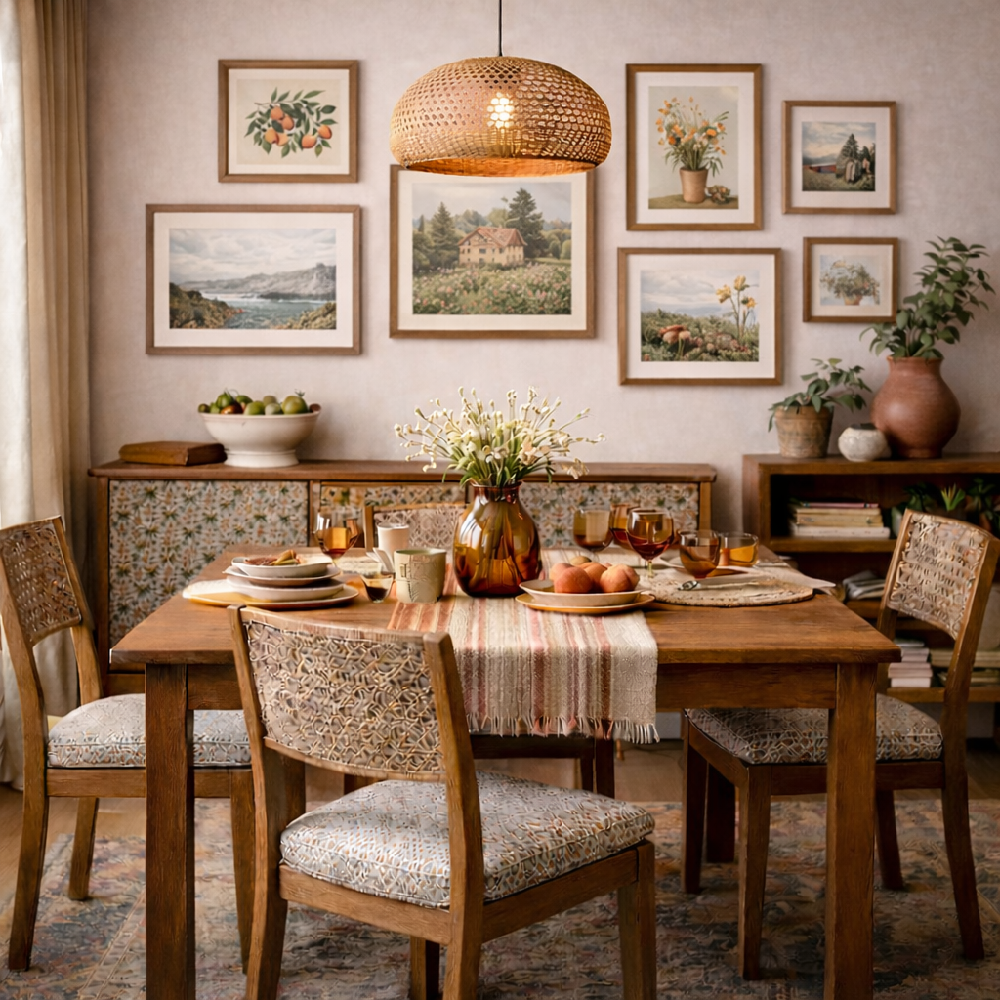
Repeating a pattern or motif once or twice helps it feel like a deliberate choice instead of an accident. A stripe that appears in both a pillow and a throw or a subtle geometric echoed in artwork creates cohesion across the room.
Once a pattern has been repeated, it has done its job. Adding too many variations can dilute the effect and make the space feel busy rather than balanced.
Trust How the Room Feels
The most successful pattern mixes reflect how a home is actually used. If a combination feels too bold, soften it with texture. If it feels flat, introduce contrast through fabric or scale rather than adding more color.
Rooms that feel collected over time tend to have the most character. When patterns are chosen with comfort and personality in mind, they settle into place naturally.
Pattern mixing is most successful when it feels relaxed and unforced. At American Home Furniture and Mattress, spaces are built around balance first, with patterns layered in gradually rather than all at once. Rugs, pillows, and upholstery are mixed through scale and texture, so each element has room to breathe. This approach translates easily to real homes, where comfort, flexibility, and a collected overtime feel matter most.
World Class, Local Style. Easy living thoughtfully layered.