
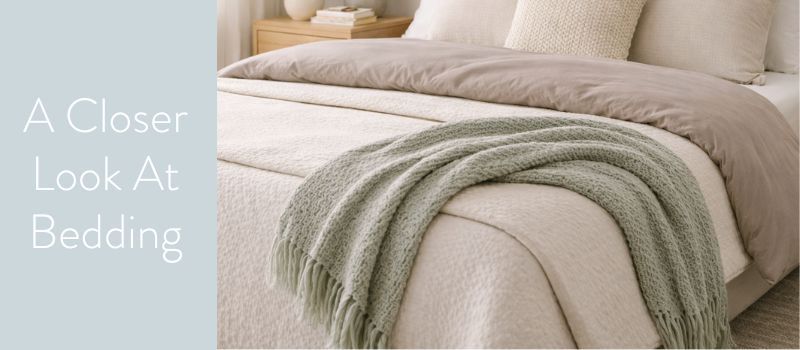
Bedding terms are often used interchangeably, which makes it harder than it should be to choose what works for your sleep style and your space. Coverlets, quilts, comforters, duvets, and throws all serve different purposes, even though they may look similar at a glance.
Understanding how each layer functions help you build a bed that feels comfortable, looks intentional, and adapts easily throughout the year.
Coverlets: Lightweight and Structured
A coverlet is one of the lightest bedding layers. It is thin, low profile, and typically designed to sit neatly on top of the bed. Coverlets are often used for a clean, finished look without added bulk.
They work well for warm sleepers or for households that prefer layering rather than a single heavy piece. A coverlet can be used on its own or layered over sheets and under a throw for added texture.
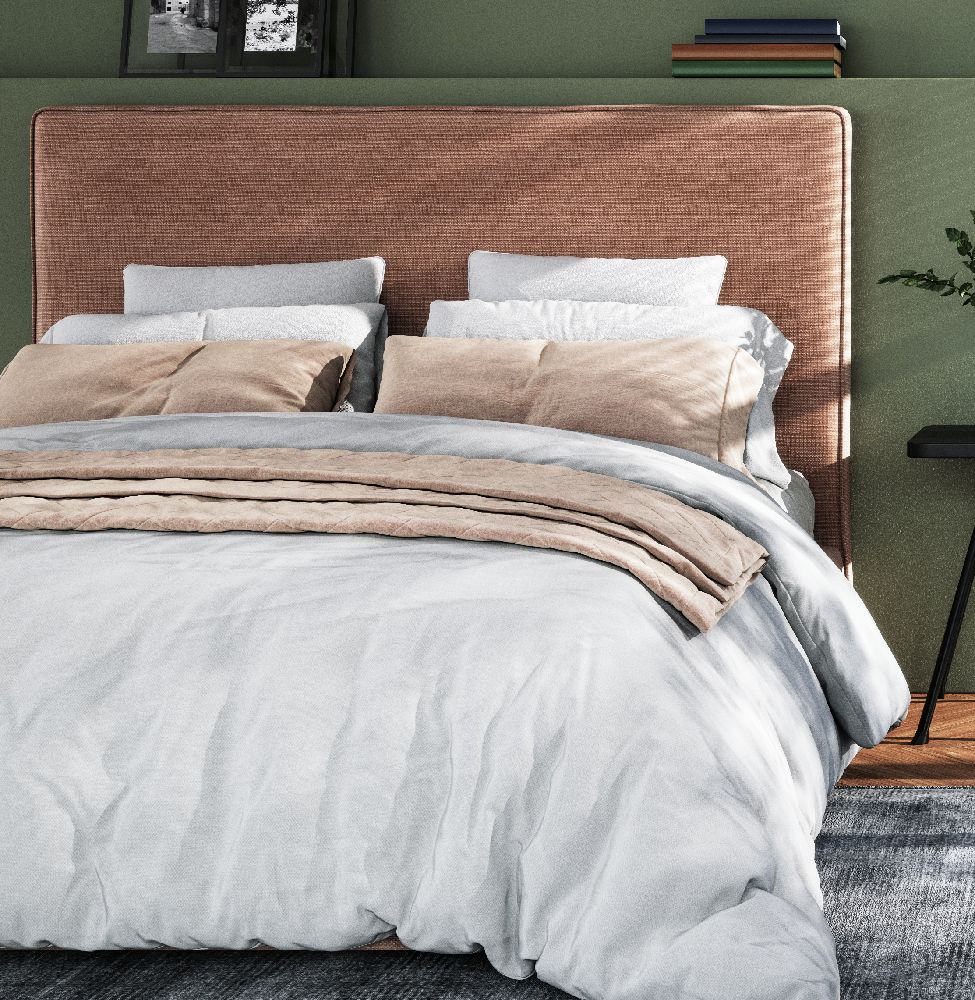
Duvets: Flexible and Changeable
A duvet consists of two parts: an insert and a removable cover. The insert provides warmth, while the cover allows you to change the look of the bed without replacing the entire piece.
This setup makes duvets especially practical for easy cleaning and seasonal style changes. Warmth levels vary depending on the insert you choose, which allows duvets to adapt to different comfort needs.
Comforters: Warmth Without Layers
Comforters are designed to be the primary source of warmth on the bed. They are filled with down or a down alternative, which gives them their loft and insulation.
Unlike coverlets or quilts, comforters are meant to be used on their own rather than layered heavily. They are ideal for colder sleepers or for rooms that tend to stay cool, offering consistent warmth in a single piece.
Quilts: Breathable With Texture
Quilts are slightly thicker than coverlets and are defined by their stitched construction. They are usually made with cotton layers that allow airflow, making them a comfortable option for year-round use.
Quilts add softness and texture without feeling heavy. They are a good choice for sleepers who want warmth without weight and for those who like a relaxed, layered bed that still feels breathable.
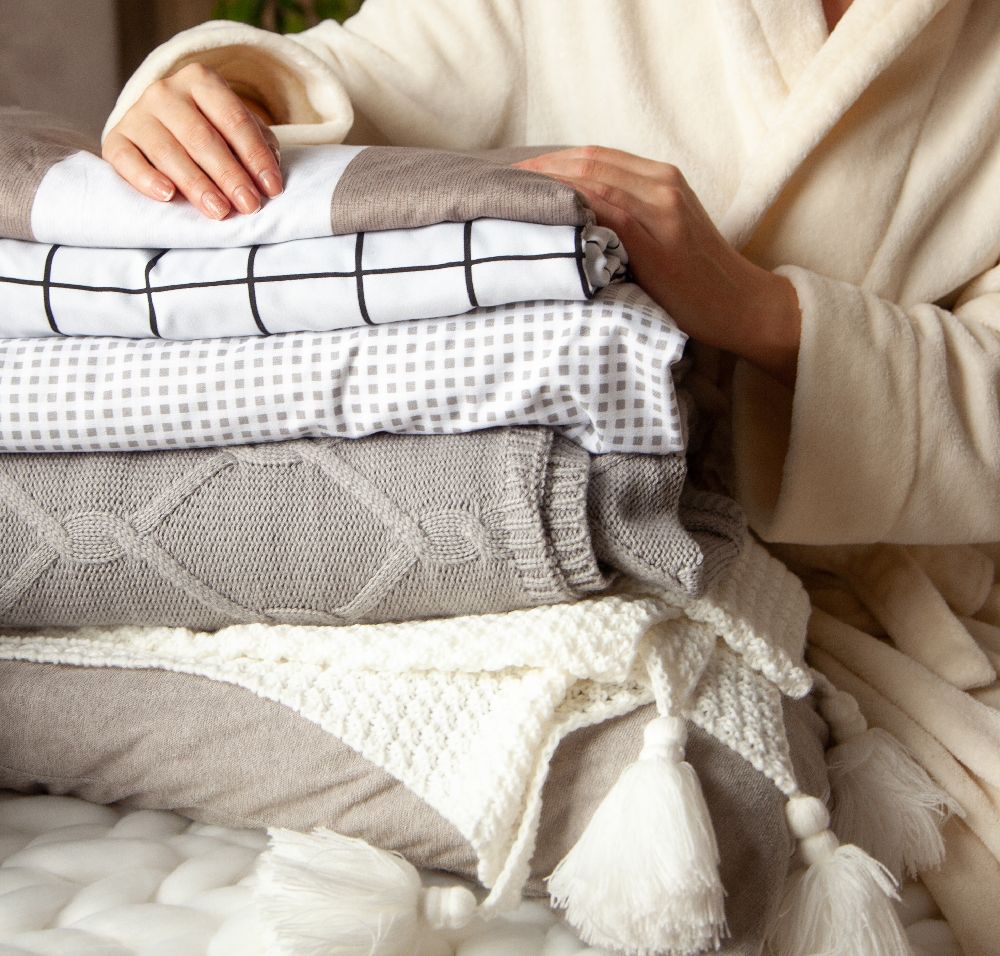
Throws: Accent and Adaptability
Throws are smaller than other bedding layers and are designed for flexibility. On a bed, they are often folded at the foot or draped casually for visual balance and added warmth.
Throws are not meant to replace primary bedding, but they are an easy way to adjust comfort or add texture without reworking the entire setup. They also transition easily to other rooms, making them one of the most versatile pieces in the home.
How These Layers Work Together
Most beds use more than one of these pieces. A quilt paired with a throw creates a light, breathable setup. A duvet can be layered with a folded coverlet for structure. A comforter may be softened with a throw at the foot of the bed.
The goal is not to use everything at once, but to choose layers that support how you sleep and how you want the room to feel.
Building a comfortable bed starts with understanding what each layer is meant to do. At American Home Furniture and Mattress, bedding is approached with flexibility in mind, allowing pieces to work together rather than compete. When layers are chosen with intention, comfort becomes easy to adjust, and style feels effortless throughout the year.
World Class, Local Style. Comfort Starts with the Right Layers.